
US highway network with AI road scanning visualization
Country Intelligence Series — United States of America

AI Road Asset
Management for USA

AI-powered pavement management USA — automated condition monitoring, FHWA-compliant reporting, and IIJA grant documentation for state DOTs, county road departments, and municipal engineers managing the world's largest highway system.
4.2M mi
Total Road Network
40%
Paved Roads in Poor Condition
684B+
Infrastructure Funding Gap (ASCE)
50+
State DOTs Served
The Network

4.2 Million Miles. Three Tiers.
One Unified Platform.

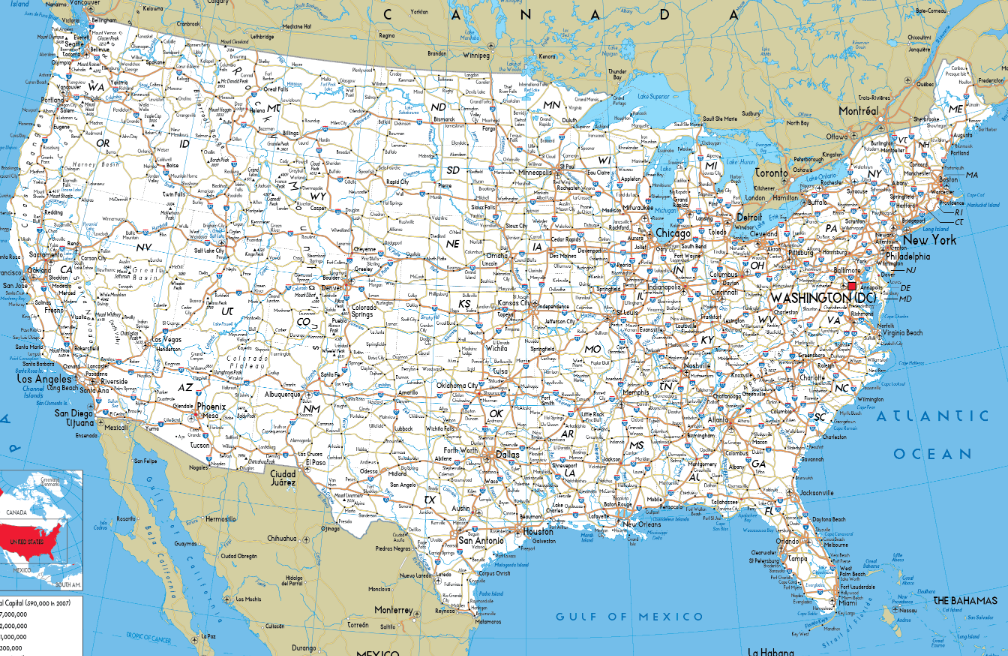
US Road Network Map

Network Structure
Who Owns What

Local / Municipal Roads (counties, cities, townships)77.5%
State DOT Roads (interstate, NHS, state routes)19.1%
Federal Lands Highways (USFS, NPS, BLM, tribal)3.4%

77% of US roads are locally owned by counties, municipalities, & townships with limited pavement engineering capacity. IIJA injected $110B into surface transportation, but without current data, agencies cannot direct that funding where it generates the highest return. State DOT pavement management software ensures every infra dollar is allocated on evidence, not estimation.

The Challenge

Six Issues Defining
US Road Management

01

Condition Data 4–6 Years Out of Date

  • Most local agencies — counties and small cities — have pavement condition data that is 4–6 years old. Evidence-based capital investment is impossible without current IRI and PCI baselines.
  • Traditional survey contracts are unaffordable at annual frequency for local budgets. AI road condition assessment USA delivers monthly updates at 80–90% lower cost per lane-mile.
02

$684B Deferred Maintenance Backlog

  • Missed preventive treatment cycles compound future costs 4–6×. FHWA data shows treating pavement at IRI 95–130 in/mile costs a fraction of rehabilitation above IRI 170.
  • Without continuous condition monitoring, agencies routinely miss the preservation window — converting a $50,000 preventive seal into a $300,000 mill-and-fill within three years.
03

IIJA Accountability — Prove Performance or Lose Funding

  • The Infrastructure Investment and Jobs Act mandates documented performance outcomes for NHS pavement targets under 23 CFR 490. Agencies that cannot demonstrate condition improvement risk reduced future allocations.
  • FHWA HPMS pavement data submission requires current, network-wide IRI — not 4-year-old estimates. Continuous AI monitoring makes HPMS compliance automatic, not manual.
04

Freeze-Thaw, Heat, and Climate-Accelerated Deterioration

  • Northern states (Minnesota, Michigan, New York, Wisconsin) face 80–120 freeze-thaw cycles per year — destroying pavement bases faster than biennial inspection detects. Southern states face heat-induced rutting and alligator cracking that compound between survey cycles.
  • Post-winter rapid assessment before the spring construction season — and post-hurricane assessment in coastal states — are operationally critical at timescales traditional surveys cannot meet.
05

Local Agency Capacity Gap

  • 3,000+ counties and 19,000+ municipalities lack dedicated pavement engineering staff. Capital decisions default to complaint volume and elected-official priority rather than objective network condition.
  • US municipal road asset management AI delivers pavement engineering intelligence to local agencies that cannot afford to hire it — actionable condition data, grant documentation, and treatment scheduling without adding headcount.
06

Interstate Freight Corridor Structural Damage

  • Interstate and NHS freight corridors carry ESAL loads that exceed original design assumptions — particularly on high-volume truck routes (I-80, I-10, I-95). Structural pavement damage accumulates without visible surface distress.
  • Traditional visual and IRI surveys miss subsurface structural damage. Continuous ESAL-based deterioration modelling is the only reliable early-warning system for interstate freight corridor preservation.
Standards & Compliance

Natively Aligned to FHWA, AASHTO,
and Federal Performance Frameworks

FHWA compliant pavement condition monitoring — outputs built for US road engineering practice. Every IRI threshold, distress classification, and report format is configured to the relevant federal standard.

IRI — FHWA / AASHTO

Network-scale IRI from dashcam and LiDAR. FHWA thresholds applied: Good <95 in/mile | Fair 95–170 | Poor >170. State-specific calibration applied where DOT thresholds differ from federal defaults.

PCI — ASTM D6433

Full ASTM D6433-compliant distress detection and PCI scoring for flexible and rigid pavements across all network tiers — NHS, state routes, county roads, municipal streets.

FHWA HPMS Reporting

State DOT HPMS data submissions structured and formatted to FHWA specifications — IRI, cracking, rutting, and faulting fields auto-documented for federal compliance.

23 CFR 490 (IIJA TPM)

Transportation Performance Management reporting for NHS condition targets, HSIP safety metrics, and CMAQ — biennial progress reports auto-generated.

FEMA Public Assistance

Satellite road damage detection and pre/post condition evidence structured for FEMA PA programme documentation — supporting HMGP and BRIC disaster recovery applications.

HSIP / Vision Zero

High-crash location identification using AASHTO Highway Safety Manual methodology — formatted for HSIP investment justification and Vision Zero programme submissions.

The Platform

Six Agents.
Purpose-Built for the US Road System.

AI road inspection software for DOTs and local agencies — 6 agents covering FHWA HPMS compliance, 23 CFR 490 TPM reporting, FEMA disaster documentation, HSIP safety analysis, & IIJA grant preparation.

FHWA HPMS COMPLIANT

Pavement Intelligence Agent

Network-scale IRI, PCI, and ASTM D6433 distress mapping — FHWA-formatted, HPMS submission-ready

Click to explore
Outputs

Network-scale IRI, PCI, and ASTM D6433 distress mapping — FHWA-formatted, HPMS submission-ready

Standards

FHWA IRI thresholds; ASTM D6433 PCI; MEPDG climate-zone calibration; state DOT threshold sets applied per jurisdiction

Input

Dashcam video or LiDAR — no specialist survey vehicle; scalable to county roads and municipal streets

Cost

$80–$200/lane-mile vs. $800–$2,000 for traditional inertial profiler survey

Cadence

Monthly updates — post-winter northern states and post-hurricane coastal states rapid assessment enabled

MUTCD & HSIP READY

Roadside Asset Inventory Agent

Sign, guardrail, pavement marking, drainage, barrier, and delineator — MUTCD compliance gap identification

Click to explore
Inventory

Sign, guardrail, pavement marking, drainage, barrier, and delineator — MUTCD compliance gap identification

Standards

MUTCD sign and marking standards; HSIP safety eligibility documentation; ADA/ABA compliance flagging

Output

Asset registers for state DOT and local agency capital plans; HSIP federal-aid project documentation

FEMA PA READY

Rapid Disaster Assessment Agent

Satellite road damage detection within hours of hurricane, flood, tornado, wildfire, or earthquake event

Click to explore
Detection

Satellite road damage detection within hours of hurricane, flood, tornado, wildfire, or earthquake event

Coverage

Gulf Coast hurricanes, Midwest flooding, California wildfire corridors, Pacific Northwest earthquakes, Great Plains tornadoes

Output

FEMA PA documentation — pre/post condition evidence, damage extent mapping, cost estimate support for PA and HMGP applications

23 CFR 490 COMPLIANT

IIJA Performance Management Agent

NHS pavement condition target tracking and 23 CFR 490 biennial progress reporting for FHWA

Click to explore
Function

NHS pavement condition target tracking and 23 CFR 490 biennial progress reporting for FHWA

Output

Automated HPMS submissions; TPM progress reports; IIJA grant documentation — RAISE, INFRA, PROTECT, BRIC packages auto-generated

Standards

23 CFR 490 TPM; FHWA HPMS specifications; IIJA performance accountability requirements

HSIP / VISION ZERO ALIGNED

Road Safety Intelligence Agent

Computer vision — pavement condition, roadside geometry, MUTCD sign compliance, marking degradation, sight distance, intersection layout

Click to explore
Method

Computer vision — pavement condition, roadside geometry, MUTCD sign compliance, marking degradation, sight distance, intersection layout

Standards

AASHTO Highway Safety Manual; HSIP investment justification methodology; Vision Zero countermeasure framework; FHWA STATS crash data integration

Output

High-crash location scoring; HSIP project justification packages; Vision Zero corridor reports for state and local programme submissions

CLIMATE & FREIGHT

Freight Corridor & Climate Monitoring Agent

Interstate freight corridors, freeze-thaw networks, hurricane corridors, and Sunbelt heat-rut monitoring

Click to explore
Coverage

Interstate freight corridors (I-80, I-10, I-95, I-94); northern freeze-thaw networks; Gulf Coast hurricane corridors; Sunbelt heat-rut monitoring

Function

ESAL accumulation modelling vs. original design assumptions; seasonal deterioration tracking; post-disaster network triage

Output

Predictive structural failure alerts for interstate corridors; spring construction season opening reports for northern DOTs

Economics

Making Every
Infrastructure Dollar Count

The $684B backlog compounds because annual network-wide survey is unaffordable
at $800–$2,000 per lane-mile. Automated road condition monitoring USA changes
the economics at every tier — from state DOT to county road department.

Cost Comparison — Per Lane-Mile
Traditional Inertial Profiler Survey$ (USD) 800–2,000
RoadVision AI~$80–$200
80–90%
Survey Cost Reduction
Making annual network-wide coverage affordable for the first time
4–6×
Preventive vs. Reactive
FHWA-aligned treatment at IRI 95–130 costs far less than rehabilitation above IRI 170
Verified
IIJA Competitiveness
Condition data strengthens RAISE, INFRA, PROTECT, and BRIC grant applications
Instant
Local Agency ROI
Network intelligence without hiring new pavement engineering staff
Deployment

Three Phases — Aligned to
Federal and State Procurement Cycles

Structured for FAR, state DOT prequalification, and cooperative purchasing
vehicles including NASPO ValuePoint and OMNIA Partners.

01Months 1–3

Pilot — Validate Against PMS

Benchmark AI outputs against your existing PMS or inertial profiler data.

  • 50–500 lane-miles of state route, county road, or municipal street network
  • AI IRI and PCI outputs validated against existing PMS, inertial profiler, or windshield survey data
  • FHWA threshold calibration confirmed; cost-per-lane-mile benchmarked against current contract
  • Deliverable: FHWA IRI and ASTM D6433 PCI comparison report; HPMS test submission package
02Months 3–9

Network Rollout — Full Jurisdiction

Full state DOT, county, or municipal coverage with monthly condition updates.

  • Integration with existing PMS (ESRI ArcGIS, AgileAssets, dTIMS, Cartegraph) and GIS layers
  • FHWA HPMS submission templates activated; 23 CFR 490 TPM tracking live; IIJA grant packages generated
  • Post-winter rapid assessment for northern DOTs; post-hurricane protocols for coastal states
03Month 9+

Continuous Intelligence

Predictive scheduling replaces periodic survey contracts as primary condition evidence.

  • Ongoing MEPDG-calibrated deterioration modelling; annual HPMS updates; 23 CFR 490 biennial reports automated
  • FEMA PA rapid-assessment on-call; HSIP safety analytics continuous; Vision Zero reporting quarterly
  • Multi-year capital scenario modelling updated per DOT STIP cycle and local agency budget calendar

Procurement: Available as professional services contract or SaaS subscription. Compliant with FAR, state procurement codes, & cooperative purchasing vehicles including NASPO ValuePoint and OMNIA Partners. Compatible with USDOT IIJA programme requirements & state DOT prequalification.

Next Step

America's Roads Need Better Data.
RoadVision AI Delivers It.

Whether you manage a state DOT network, a county road system, or a municipal street grid — book a demonstration scoped to your FHWA reporting requirements, your IIJA programme timeline, and your existing PMS platform.