

AI road condition assessment Canada — freeze-thaw monitoring & compliance
reporting aligned to TAC, MTO, MTQ, and PSAB 3150.
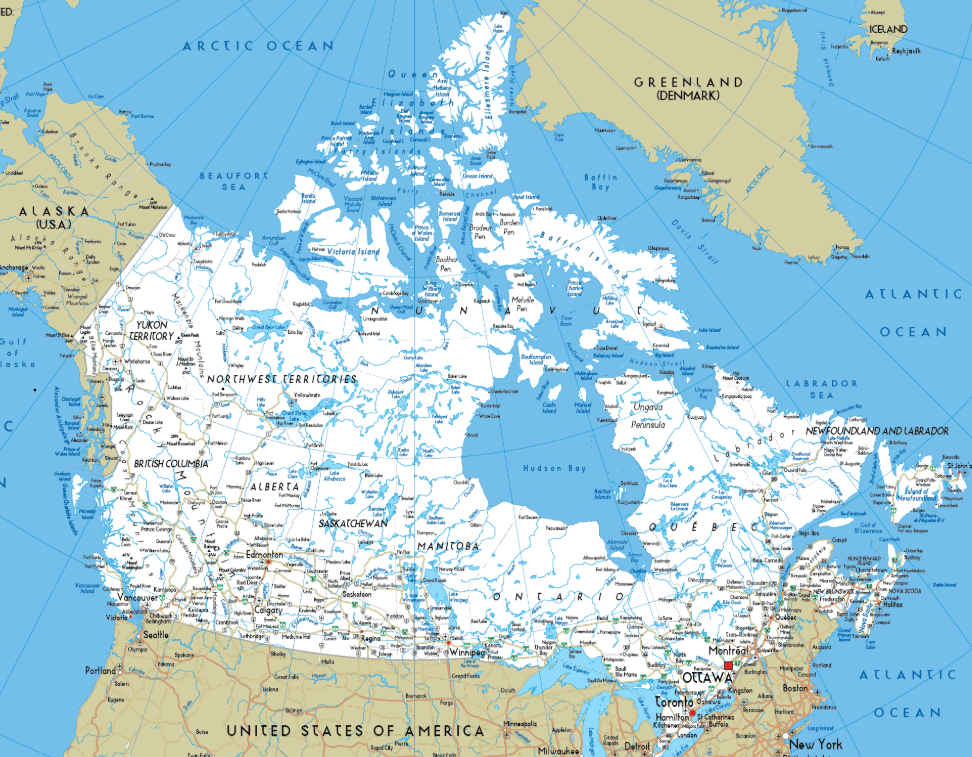
Municipal governments carry 50% of Canada's network with the least monitoring capacity. 13 provincial and territorial DOTs each operate independent standards — creating data silos that block network-wide analysis. A unified road asset management system Canada — delivered through RoadVision AI — is the intelligence layer these jurisdictions have been missing.
Automated pavement testing Canada — outputs built for Canadian practice. Every IRI threshold, distress classification, and report format is configured to the relevant federal, provincial, or territorial standard.
Condition outputs aligned to Transportation Association of Canada pavement engineering guidelines — the national reference standard for Canadian road agencies.
Network-scale IRI calibrated per province. TAC/MTO: Good <1.5 m/km | Fair 1.5–2.7 | Poor >2.7. MTQ Québec-specific CAPL thresholds applied separately per highway class.
Distress detection outputs compatible with Ontario MTO Automated Road Analyser survey methodology and DMI distress classification — enabling direct PMS comparison.
Export configured to MTO Ontario, MTQ Québec, MOTI BC, and Alberta Transportation PMS requirements. No manual data migration.
Independent IRI verification for Public Services and Procurement Canada P3 highway concession oversight and performance bond compliance.
Roadside asset inventory and bridge deficiency data structured for PSAB 3150 tangible capital asset reporting and CSA S6 bridge inspection standards.
Road safety audit and blackspot analysis aligned to Canada's Road Safety Strategy 2025 targets and iRAP methodology for federal programme submissions.
Québec MTQ Note: MTQ uses IRI thresholds and distress classifications distinct from TAC national guidelines. RoadVision AI includes MTQ-specific calibration for accurate condition assessment across all Québec highway classes — outputs are bilingual (EN/FR) by default.
Smart pavement analytics platform covering every major workflow. TAC compliant condition surveys to post-wildfire emergency assessment, province-specific & bilingual.
Network-scale IRI and PCI from dashcam or LiDAR — province-specific rating scales including MTQ CAPL and MTO OPSS
Network-scale IRI and PCI from dashcam or LiDAR — province-specific rating scales including MTQ CAPL and MTO OPSS
TAC, MTO, MTQ, MOTI BC, Alberta Transportation — threshold sets applied per jurisdiction
Dashcam video or LiDAR — no specialist survey vehicle required
CAD $100–$200/lane-km vs. CAD $800–$2,000 for traditional ARAN-equivalent survey
Monthly updates — post-thaw spring assessment enabled before construction season opens
Sign, guardrail, line marking, drainage, culvert, and bridge deficiency flagging
Sign, guardrail, line marking, drainage, culvert, and bridge deficiency flagging
PSAB 3150 tangible capital asset reporting; CSA S6 bridge deficiency classification
Asset registers formatted for municipal financial statements and federal audit requirements
Seasonal condition tracking with freeze-thaw cycle modelling per province and territory
Seasonal condition tracking with freeze-thaw cycle modelling per province and territory
Permafrost thaw monitoring (Yukon, NWT, northern BC); spring thaw damage detection before construction season
Pre-season damage reports enabling rapid treatment scheduling within the 5–7 month working window
Satellite damage detection within hours of wildfire, flood, or extreme weather event
Satellite damage detection within hours of wildfire, flood, or extreme weather event
BC wildfire corridors, AB flood networks, northern permafrost collapse events
DMAF funding documentation — pre/post condition evidence generated simultaneously with field response
Computer vision — pavement condition, roadside geometry, signage, line marking, sight distance
Computer vision — pavement condition, roadside geometry, signage, line marking, sight distance
TAC Geometric Design Guide alignment; iRAP methodology; Canada Road Safety Strategy 2025 targets
High-collision location scoring and automated Road Safety Audit evidence for INFC submissions
OSIM-compatible inspection scheduling; multi-year budget scenario modelling
OSIM-compatible inspection scheduling; multi-year budget scenario modelling
ICIP and INFC grant application documentation — condition evidence packages generated automatically
Aligned to federal INFC Asset Management Planning requirements for grant eligibility
The $30B infrastructure deficit persists because annual network-wide surveys are unaffordable at traditional rates — and without condition data, grant applications fail. AI-powered road inspection Canada changes the cost equation for every jurisdiction.
Structured for provincial tendering requirements, bilingual documentation (EN/FR), PSPC standing offers, and the operational reality of a 5–7 month construction season.
Benchmark AI outputs against existing ARAN, MTO or MTQ data.
Full provincial or municipal coverage with monthly condition updates.
Predictive scheduling replaces biennial ARAN survey contracts.
Procurement: Available as professional services or SaaS subscription. Compatible with PSPC standing offers, provincial tendering thresholds, cooperative purchasing arrangements, and MERX/BuyandSell listings. Bilingual (EN/FR) contract documentation available.
Whether you manage a provincial highway network, a county road system, or a northern territorial corridor — book a demonstration scoped to your jurisdiction, PMS system, and federal reporting requirements. Powered by AI road condition assessment Canada and AI-powered road inspection Canada.