

AI road condition monitoring Argentina — DNV CROA-compliant inspection, PPP concession verification, and Pampas freight corridor intelligence for DNV, 23 provincial DPVs, AUSA, and PPP operators.
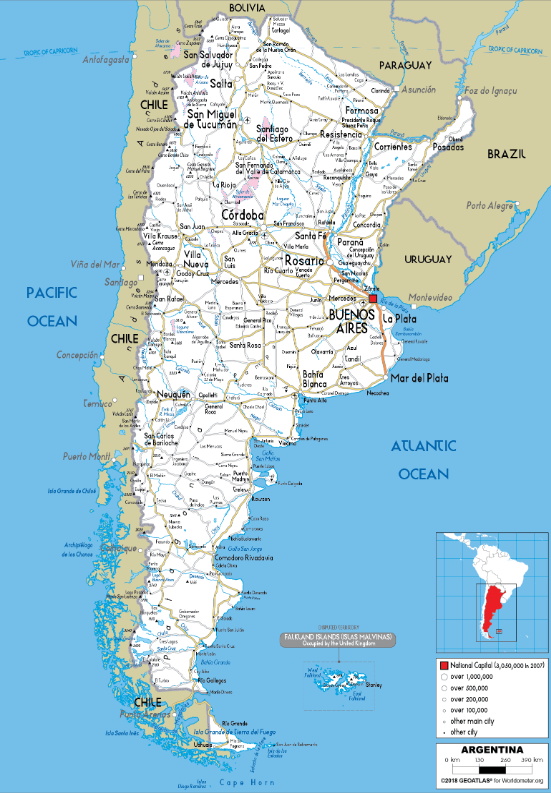
DNV manages the 40,000-km RN backbone and PPP contracts using the CROA methodology. Each of the 23 provinces operates its own DPV with deeply uneven capacity. AUSA operates Buenos Aires' urban expressways. Argentina highway asset management AI serves all four tiers from a single CROA-compliant platform.
DNV CROA pavement assessment AI Argentina — outputs built for Argentine road engineering practice. Every condition rating, IRI threshold, and report format is configured to the relevant DNV standard or PPP contract specification — not adapted from Brazilian or Chilean templates.
DNV's five-level national condition methodology. RoadVision AI generates CROA-compatible ratings: Muy Bueno | Bueno | Regular | Malo | Muy Malo — aligned to DNV's official classification system.
Network-scale IRI calibrated to DNV thresholds: Muy Bueno <1.5 | Bueno 1.5–2.5 | Regular 2.5–4.0 | Malo 4.0–5.5 | Muy Malo >5.5 m/km. Climate-zone correction per region — Pampas, Cuyo, Patagonia, NOA, Mesopotamia.
Distress detection and condition reporting aligned with DNV distress classification categories for both flexible and rigid pavement types across the national RN network.
Deterioration models calibrated to IRAM-referenced material performance specifications — the definitive Argentine reference for pavement structural design and maintenance specification.
Continuous independent IRI verification for DNV PPP programme oversight and Ministerio de Infraestructura monitoring — monthly compliance dashboards replacing periodic manual audits.
Traffic classification using RNTA categories and axle load equivalencies. ESAL accumulation modelling for Pampas freight corridors benchmarked against original RN structural design assumptions.
High-accident location identification and road safety audit outputs aligned with ANSV Plan Nacional de Seguridad Vial targets and DNV safety programme reporting requirements.
Fiscal Crisis Economics: When the peso depreciates and construction costs spike, the ROI of preventive maintenance widens dramatically. Treating a road at IRI 2.5–4.0 today avoids reconstruction at tomorrow's inflated prices — in pesos that have devalued further. Continuous IRI monitoring makes consistently hitting the preventive window possible, not accidental.
AI highway inspection software Argentina DNV — six agents covering every major workflow: DNV CROA and IRI national reporting, PPP and AUSA concession compliance, Pampas ESAL monitoring, Defensa Civil documentation, and ANSV road safety analysis.
Network-scale CROA ratings and IRI from dashcam or LiDAR — DNV distress classification, climate-zone calibrated for Pampas, Cuyo, Patagonia, NOA, Mesopotamia.
DNV CROA methodology; DNV IRI thresholds; IRAM material calibration; PPP contract performance annex-compatible
Dashcam video or LiDAR — no specialist survey vehicle; scalable to provincial DPV and municipal networks
USD $40–$120/lane-km vs. USD $400–$1,200 for traditional survey (USD-indexed to avoid peso devaluation impact)
Monthly updates — post-Litoral flood rapid assessment and pre-harvest Pampas baseline enabled
Continuous independent IRI monitoring for DNV PPP corridors and AUSA Buenos Aires urban expressways — daily compliance tracking against contract-specific IRI thresholds.
IRI and CROA thresholds per PPP contract performance annexes; penalty clause trigger alerts; Ministerio de Infraestructura reporting
Monthly compliance dashboards — IRI breach risk alerts, PPP operator performance rankings, penalty justification evidence, dispute arbitration packages
RN 7 (Buenos Aires-Mendoza), RN 9 (Buenos Aires-Rosario-Cordoba), RN 33 (Bahia Blanca-Rosario), RN 34 (Rosario-Salta), and Rosario port access routes.
Continuous ESAL accumulation modelling vs. RNTA design assumptions; March–June harvest season structural damage tracking; pre-harvest baseline and post-harvest damage quantification
Structural failure pre-alerts before visible surface distress; seasonal corridor reports for DNV programme management and DPV maintenance scheduling
Satellite road damage detection within hours of Litoral flooding, Andean earthquake, Patagonian volcanic ash, or ENSO summer rainfall event.
Corrientes / Entre Rios Litoral flood corridors, Mendoza / San Juan / Jujuy seismic zones, Neuquen / Rio Negro Patagonian volcanic risk corridors
Defensa Civil road accessibility maps, RN closure alerts to DNV, federal reconstruction documentation — generated simultaneously with emergency response mobilisation
Sign, guardrail, line marking, drainage, culvert, and bridge approach — DNV circular-compliant classification across RN, RP (provincial), and municipal networks.
DNV distress and asset norms; DPV provincial asset register formats; IRAM material standards; Tribunal de Cuentas-auditable condition records
Asset registers for DNV RN network, 23 DPVs, and municipal road programmes — structured for federal capital allocation and provincial maintenance submissions
Computer vision — pavement condition, roadside geometry, signage compliance, sight distance, guardrail continuity, intersection layout, blackspot correlation with ANSV accident data.
DNV road safety audit methodology; ANSV Plan Nacional de Seguridad Vial 2021–2030; DENATRAN accident data integration; iRAP for international programme submissions
High-accident location scoring across RN and RP networks; countermeasure prioritisation evidence for DNV safety programmes and DPV provincial safety submissions
Traditional DNV surveys at USD $400–$1,200 per lane-km occur infrequently — leaving condition data years out of date. AI-powered road inspection Argentina delivers annual coverage at 80–90% lower cost — making evidence-based preventive investment achievable across all 23 provinces.
Annual coverage across 230,000 km becomes viable on constrained budgets
Cost advantage at IRI 2.5–4.0 — gap widens with each construction inflation cycle
IRI/CROA breach alerts enable intervention before contract penalty triggers
Vs. weeks — satellite documentation accelerates federal emergency funding
Structured for Ley de Contrataciones del Estado compliance, COMPR.AR national procurement, DNV and DPV institutional timelines, and USD-indexed pricing to protect multi-year value against peso devaluation.
Benchmark AI CROA and IRI outputs against existing DNV or DPV PMS data.
Full DNV RN, provincial DPV, or PPP/AUSA corridor coverage.
Predictive scheduling replaces periodic survey contracts as primary evidence.
Procurement: Compatible with Ley de Contrataciones del Estado · available through COMPR.AR · USD-indexed pricing protects multi-year value against peso devaluation · compatible with DNV, DPV, and municipal procurement processes.
Whether you manage the national RN network for DNV, a provincial DPV, a PPP corridor, or Buenos Aires' urban expressways — book a demonstration scoped to your CROA standards, your climate zone, and your institutional procurement framework.